Pinnacles National Park, nestled in central California, is the youngest national park in the state and one of its best-kept secrets. Born from ancient volcanic eruptions, this dramatic landscape features massive rock spires, deep talus caves, rolling oak woodlands, and rich wildlife. It is also one of the only places in North America where you can spot the endangered California condor gliding through the sky.
How to get to Pinnacles National Park?
Pinnacles is located roughly 2 to 2.5 hours south of San Francisco and 1.5 hours east of Monterey.
The park has two entrances, the East Entrance near Hollister and the West Entrance near Soledad. There is no road that connects the East and West sides inside the park. Driving between the two entrances around the outside of the park takes roughly 1.5 to 2 hours, so it’s important to choose your starting point before heading out.
You will need your own car gettig to and from and around the park as there are no shuttle services like there are at other National Parks
When is the best time to visit Pinnacles National Park?
Spring (March to May): This is hands down the best time to visit. Temperatures are mild, wildflower blooms color the hillsides, streams flow through the canyons, and water levels in the caves make exploring them exciting.
Autumn (September to November): Fall brings pleasant, cooler hiking weather and smaller crowds once the summer heat dies down.
Winter (December to February): Winter offers quiet trails and comfortable day temperatures, though nights get chilly. Keep in mind that heavy rains can temporarily flood the talus caves.
Summer (June to August): Summer brings intense heat, with daytime temperatures regularly exceeding 100 degrees Fahrenheit (38 degrees Celsius). Hikes can be dangerous during midday heat, so summer visits require very early morning starts, sun protection and extra water.

Where to stay when visiting Pinnacles National Park?
Inside the Park: Pinnacles Campground is located near the East Entrance, this is the only lodging facility inside the park. It offers tent sites, RV sites with electrical hookups, and simple canvas tent cabins. Advanced reservations can be made through Recreation.gov website.
The other option is to stay in one of the nearby towns:
West Side Gateway Towns:
- Soledad: Located just 15 to 20 minutes from the West Entrance, Soledad offers convenient chain motels and casual dining.
- King City & Salinas: King City sits about 30 minutes south, while Salinas is 45 minutes north, offering additional budget hotels and full services.
East Side Gateway Towns:
- Hollister: Located about 40 minutes north of the East Entrance, Hollister features mid-range hotels, local restaurants, and supermarkets to stock up on trail supplies.
- Tres Pinos: A small village along Highway 25 closer to the East Entrance, featuring cozy bed and breakfasts and historic inns.
East Vs West Entrance
Both entrances will give you access to the high peaks each has their own caves to explore and different facilities available.
West Entrance (Soledad):
-
Features the West Pinnacles Visitor Contact Station.
-
Quieter and less crowded than the East side.
-
Provides direct, steeper access to the High Peaks Trail and the Balconies Cave area.
East Entrance (Hollister):
-
Features the main Pinnacles Visitor Center and the park campground.
-
Provides access to the Bear Gulch Cave and Bear Gulch Reservoir.
-
Ideal for families and first-time visitors who want a wider range of amenities.
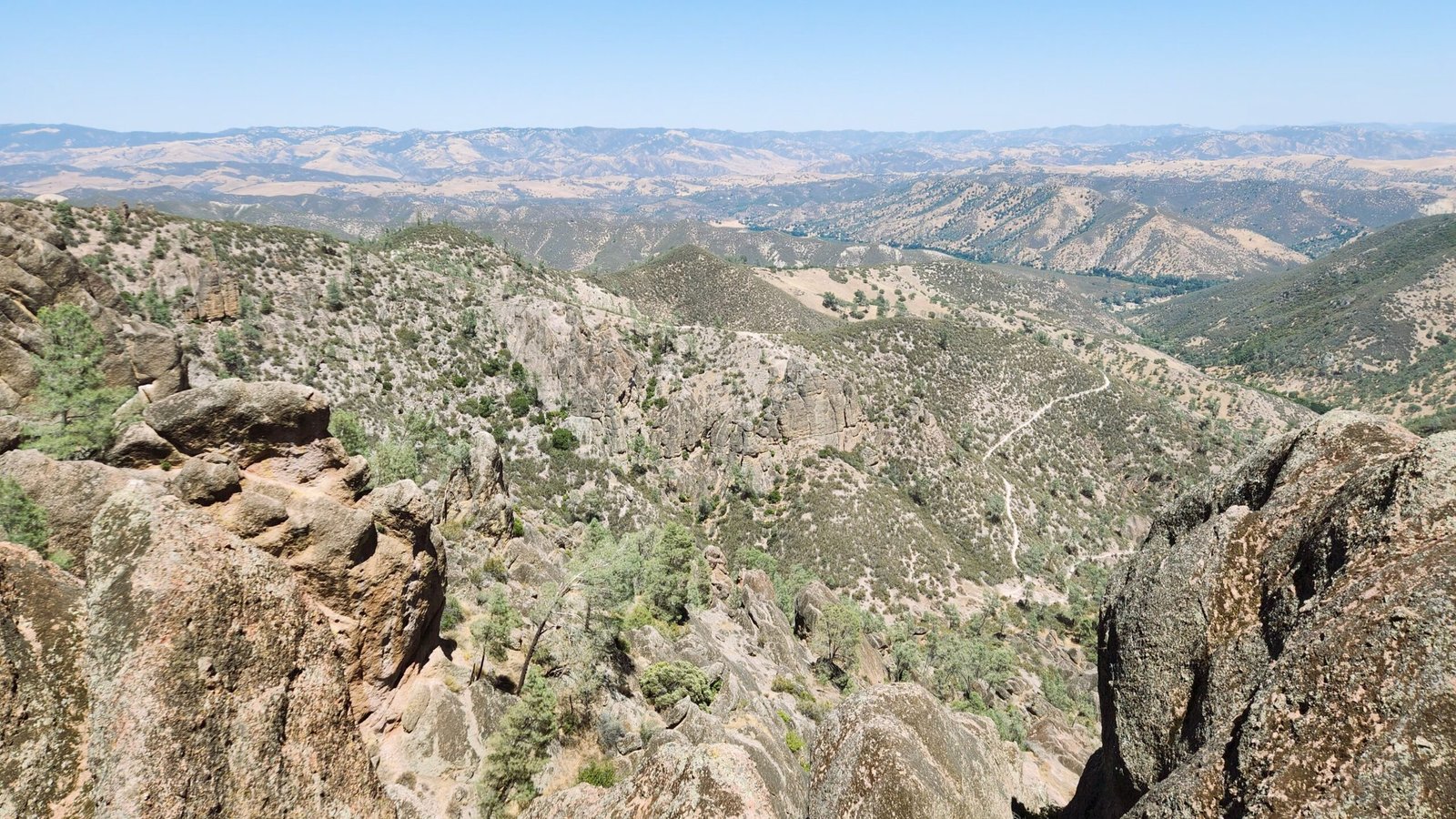
Top Hiking Trails:
-
Bear Gulch Cave and Reservoir Trail (East Side): A popular, moderate hike taking you through a dark talus cave (flashlight required) up to a scenic reservoir. Check park status ahead of time, as the cave closes periodically to protect roosting Townsend’s big-eared bats.
-
Balconies Cave and Cliff Loop (West or East Side): A thrilling trail navigating through towering fallen boulders into a subterranean gorge.
-
High Peaks Loop (Signature Trail): The park’s ultimate hike. This challenging trail climbs into the heart of the volcanic rock spires. It features a unique section with narrow foot-holds and metal handrails carved directly into the sheer rock walls.
The most popular hike is the High Peaks and Beach Gulch loop that combines a couple of the most popular trails into one larger loop where you get to experience the Pinnacle rocks that the park is famous for, see condors soaring in the high peaks and experience the unique taulus caves in Bear Gulch. We hiked the shorter Hiking the Condor Gulch Trail to High Peaks Trail Loop that hits all the same beats but in a shoter distance that was perfect as we visited in summer.
Hiking the Condor Gulch Trail to High Peaks Trail Loop
The trail starts from the Bear Gulch day use area, enter via the east entrance and head along the main park road all the way out the Bear Gulch day use area. The car park here is quite small so make sure you arrive early during busy periods to ensure you get a parking spot. The trailhead is then just accross the road from the car park. You can go in either direction if you head clockwise you will go up via Bear Gulch and anti clockwise you go straight up to the high peaks via Condor Gulch and come down via Bear Gulch. We went anti clockwise which is steeper but gets the elevation gain over faster, where clockwise has a longer and more gradual elevation gain at the end of the day it will come down to your own preference.
On the trail
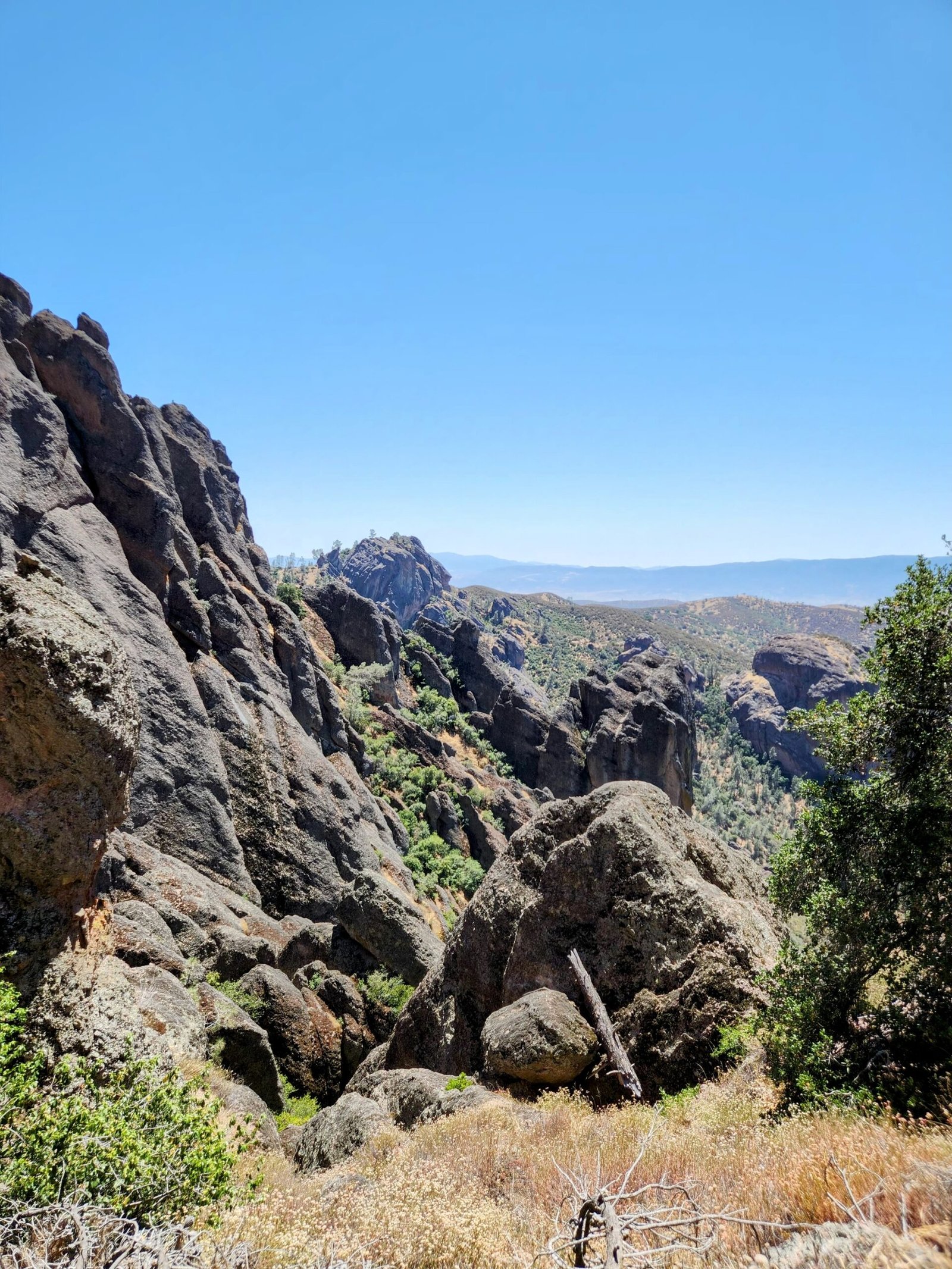
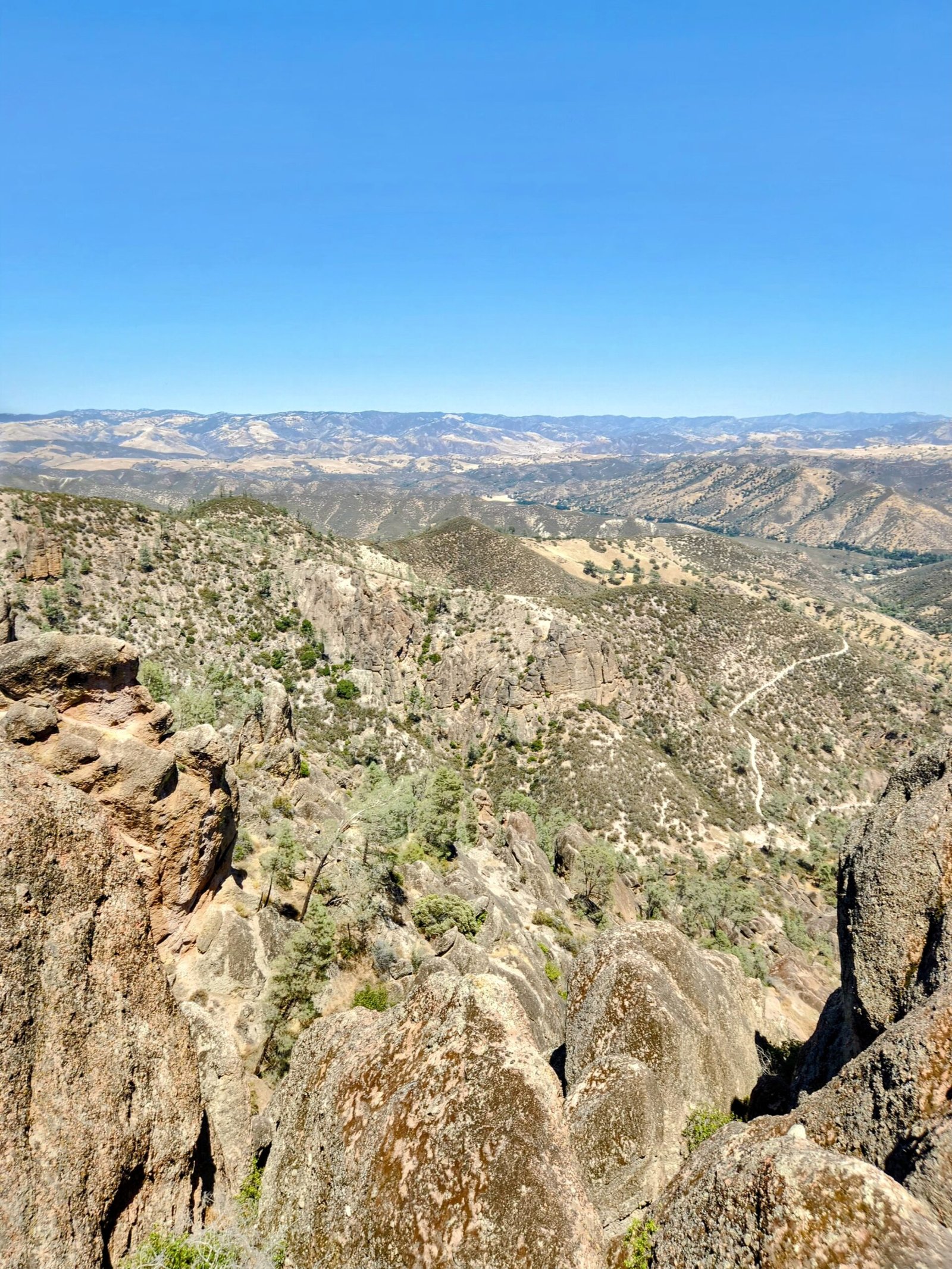
The trails is 5.4 miles (8.9km) long with 1,633ft (497m) of elevation gain and takes about 3.5 to 4 hours to complete. We went anti clockwise that takes you straight up Bear Gulch to the High Peaks trail via long steep switchbacks. Along the way you will pass the Condor Gulch overlook that has amazing view looking back down Condor Gulch and the entire East side of the park.
High Peaks
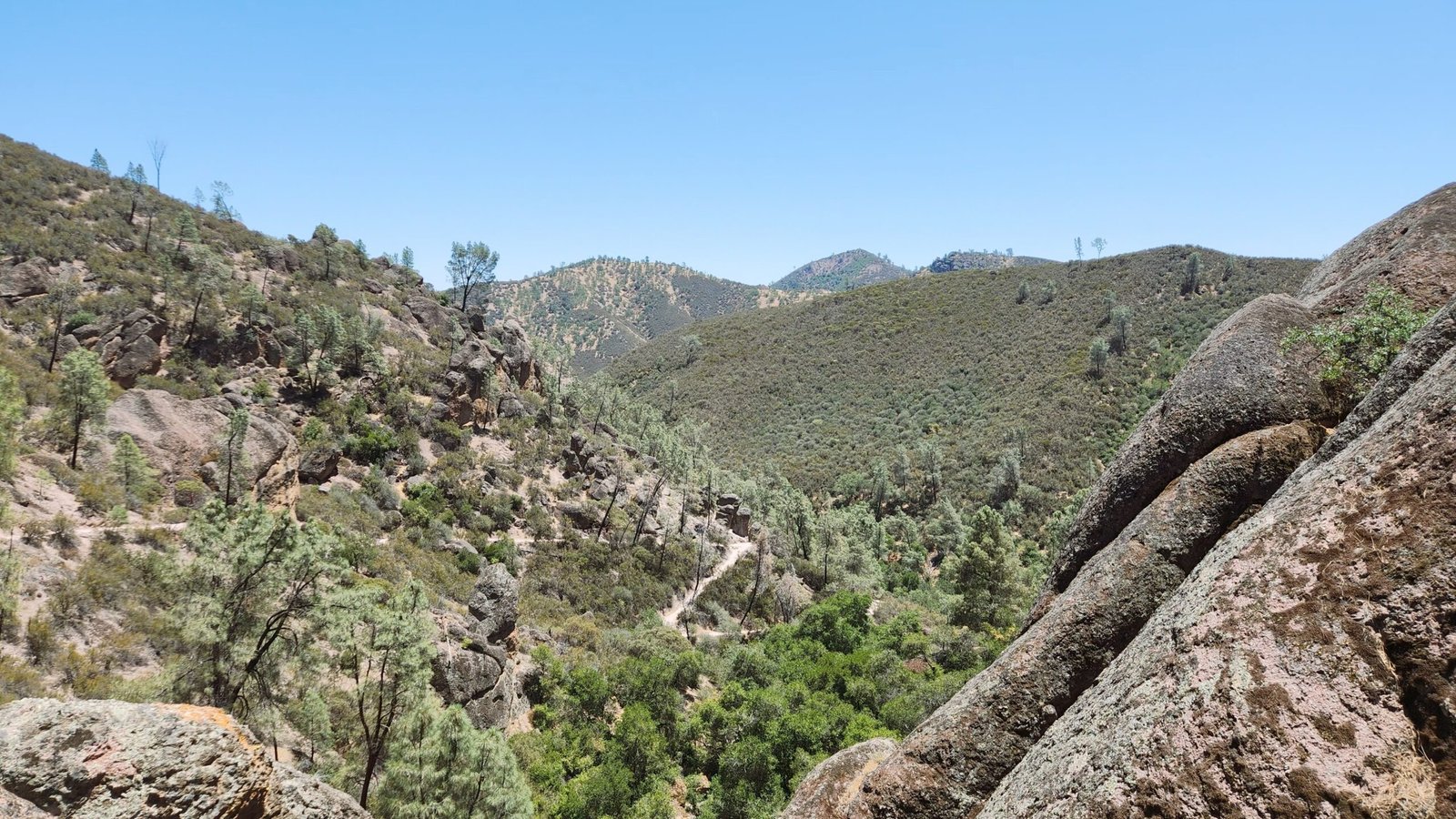
The Condor Gulch trail will eventually meet the High Peaks trail and from here all the hard work is over as you make your way along the undulating high peaks and get up close to the pinnacle formations and have breathtaking views looking over the park. This section is also the best place to spot the rare californian condor and is also home to the famous stairs section where you will navigate steep stairs and cross thin paths along perilous cliffs. It is not for the faint of heart but is a lot of fun and here you will be right at the top of the high peaks with condors and vultures soaring all around you.
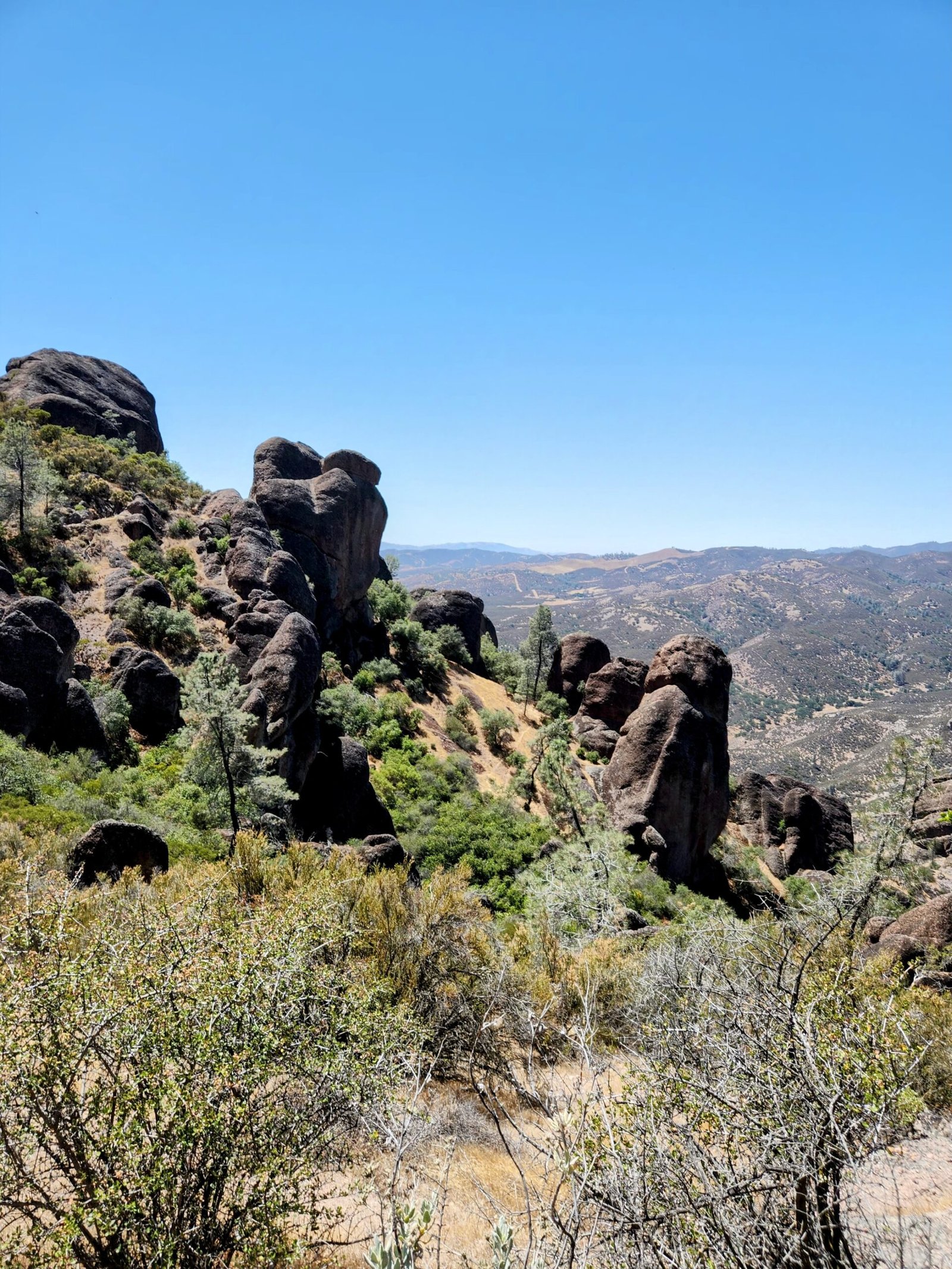
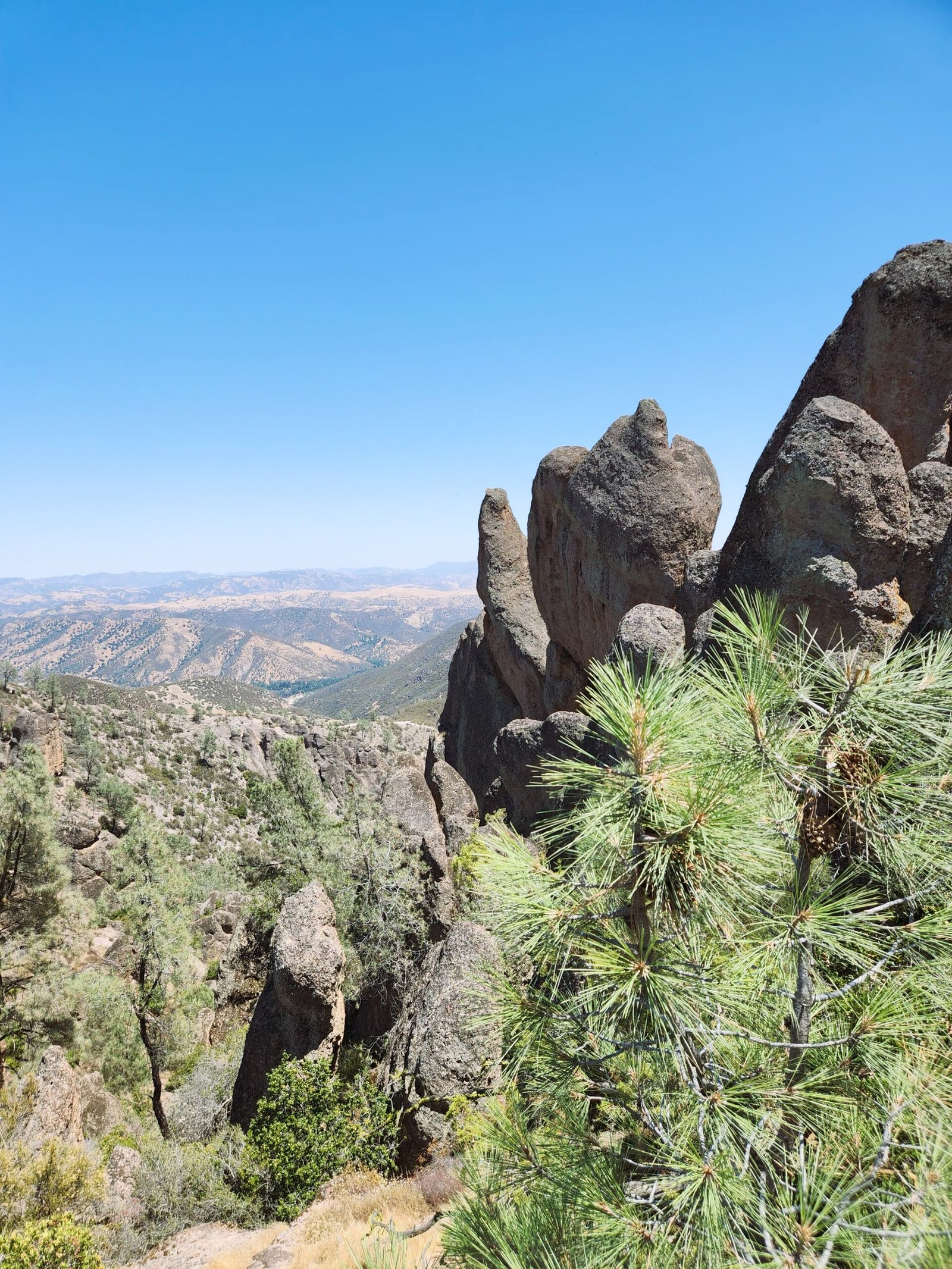
Bear Gulch Resovoir
After the high peaks the trail snakes its way down to the bear gulch area where you will eventuall reach the Bear Gulch Resovoir. The Bear Gulch Reservoir is a stunning man-made lake that was Constructed by the Civilian Conservation Corps in 1935. The reservoir is a critical habitat for California red-legged frogs which is another threatened species the park help protects and for this reason you cant swim here no matter how inviting it looks! This is a nice spot for a rest and taks some photos of the pinncales reflecting in the water.
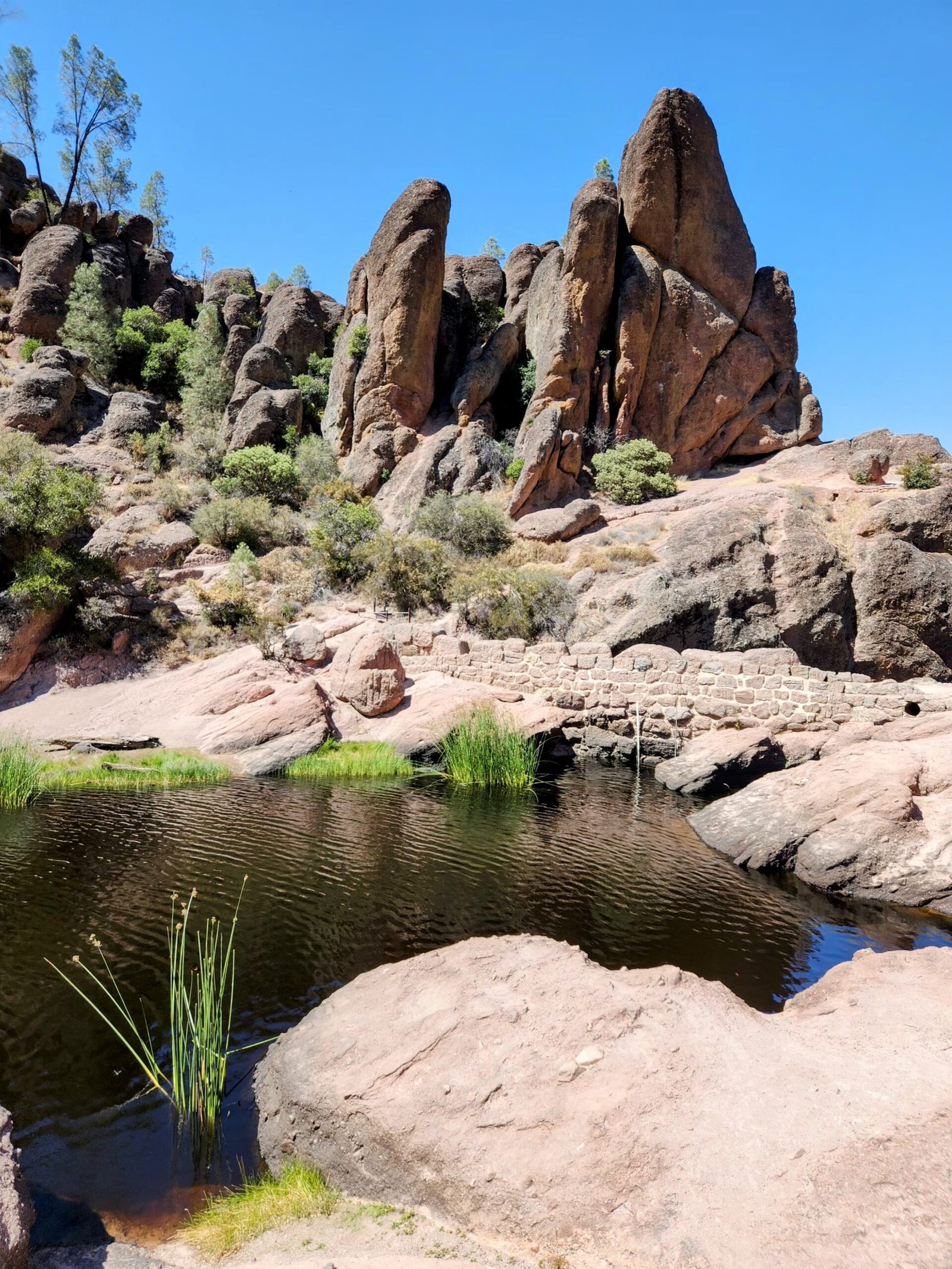
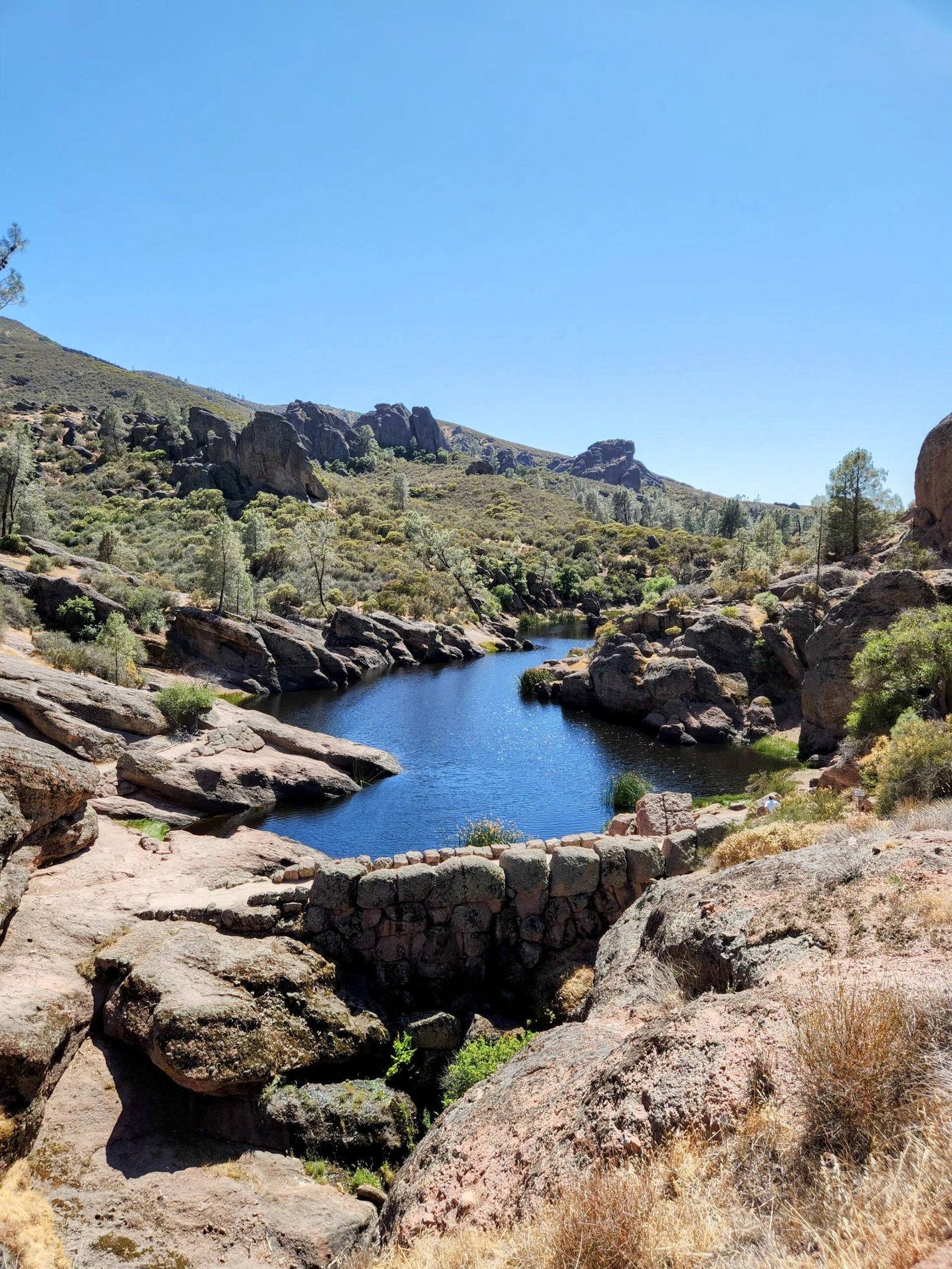
Bear Gulch Caves
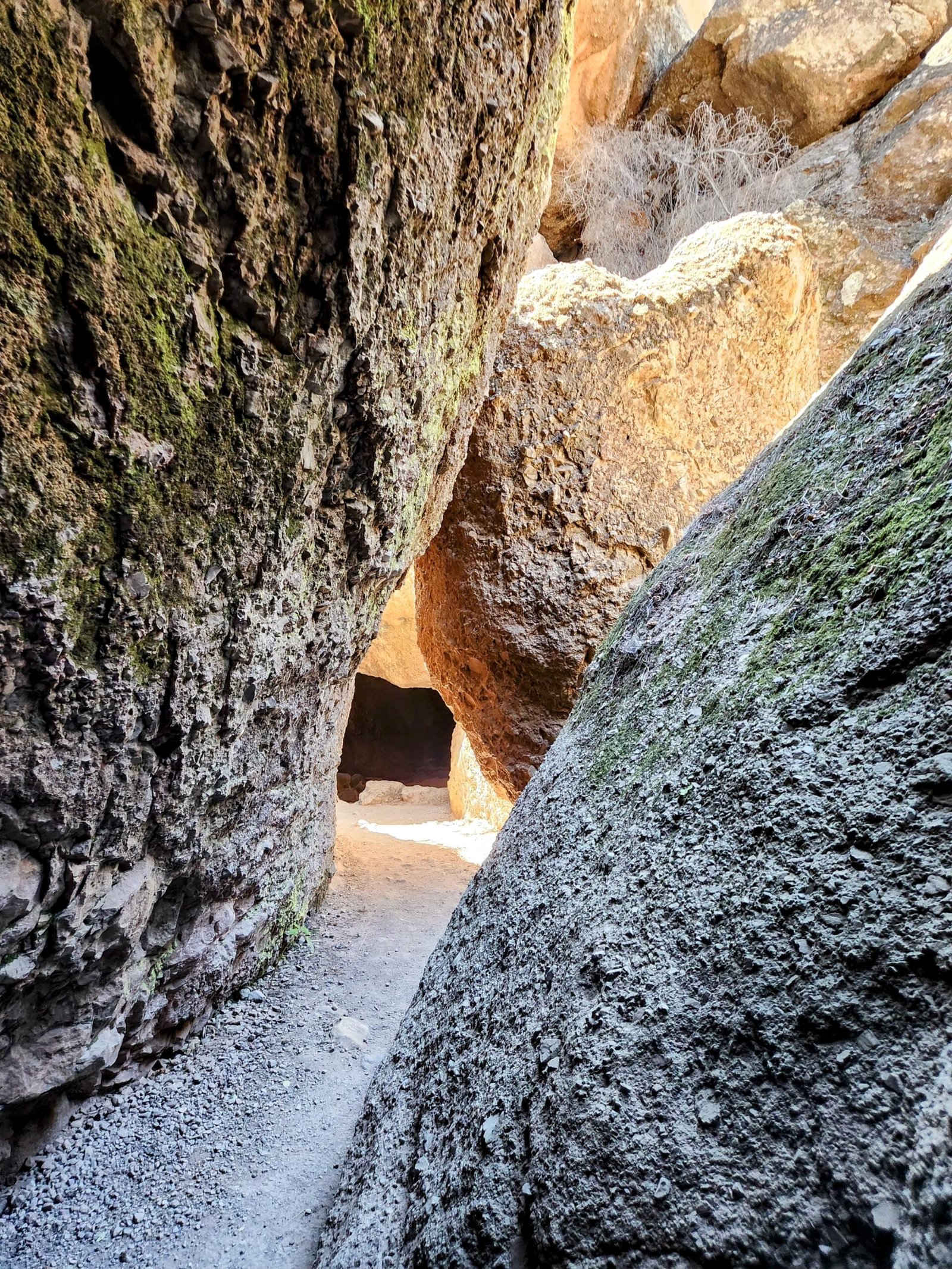
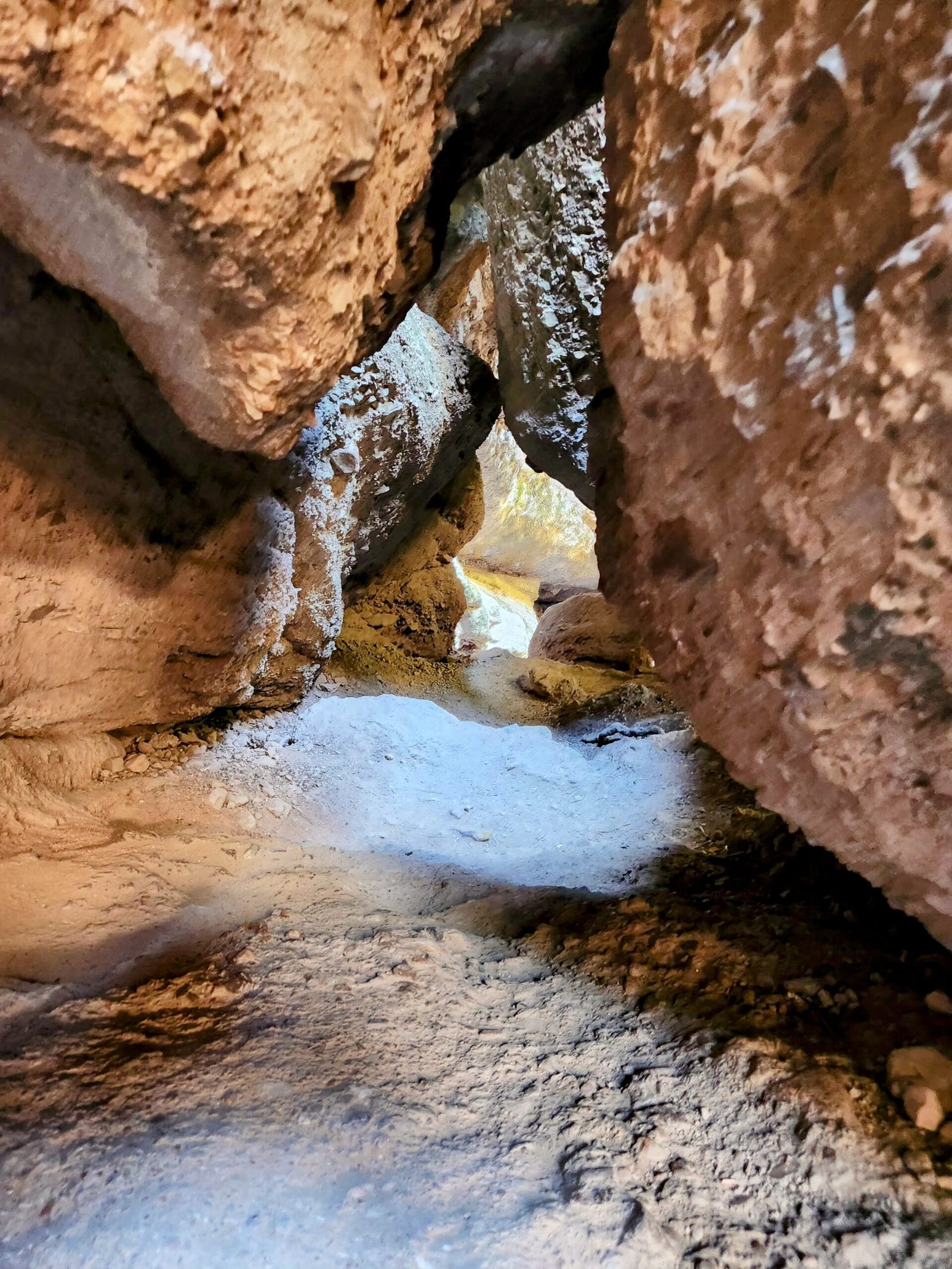
Pinnacles National Park features unique caves systems known as talus caves. These passages are created when massive boulders tumble from cliffs and wedge into narrow canyons, forming voids between the rocks and the canyon floor. These caves provide essential breeding habitats for 13 different bat species. To ensure their protection, certain routes are periodically closed to visitors during sensitive times of the year. The caves are definately a highlight of the trail, it looks really cool with the light poking between the rock and makes for some great photos. Make sure you bring a headlamp along with you on the trail for the Bear Gulch cave section. Some bits you will need your headlamp depending on the time of day.
Spotting the California Condors:
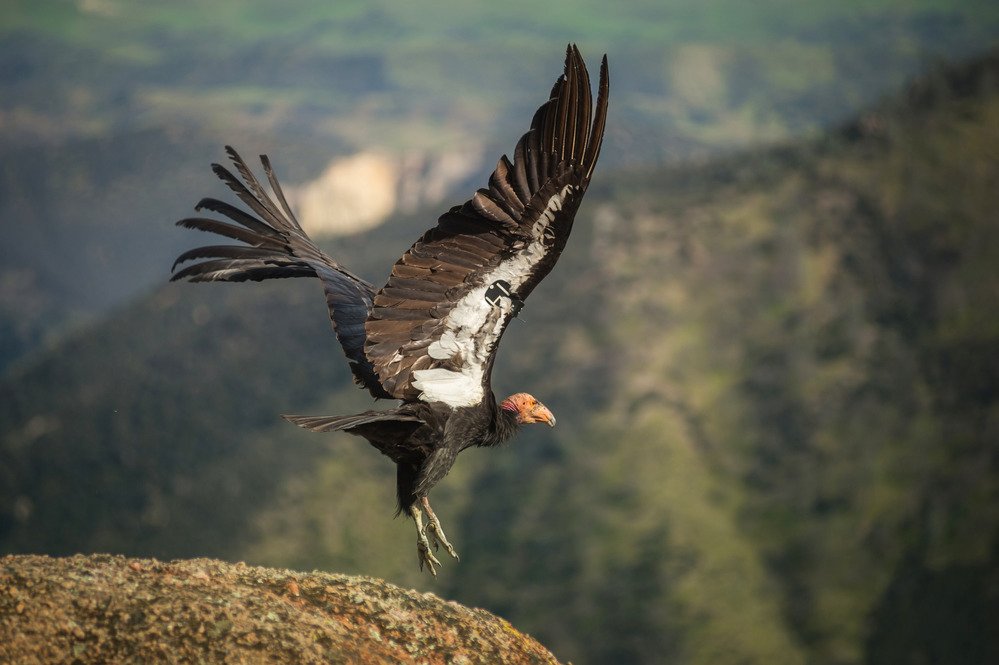
With a wingspan reaching up to 9.5 feet, the California condor is the largest land bird in North America. Pinnacles serves as a primary release and management site for these rare birds.
-
Best Spotting Locations: The High Peaks area along the High Peaks Trail is the premier viewing spot. Scout the highest rock spires or look up to watch them ride the thermal updrafts overhead.
-
Best Time of Day: Early morning and late afternoon are the best times to see condors active or roosting on the rocks.
-
How to Identify Them: Condors are often confused with turkey vultures. Look for white triangular patches under their wings, a flat wing profile while soaring, and numbered tags on their wing feathers. Turkey vultures fly with a slight V-shape and wobble in the wind, whereas condors fly steadily. Bring binoculars or a telephoto lens for the best view!